Binary options for beginners explained so you can start with a clear plan and a tested demo routine
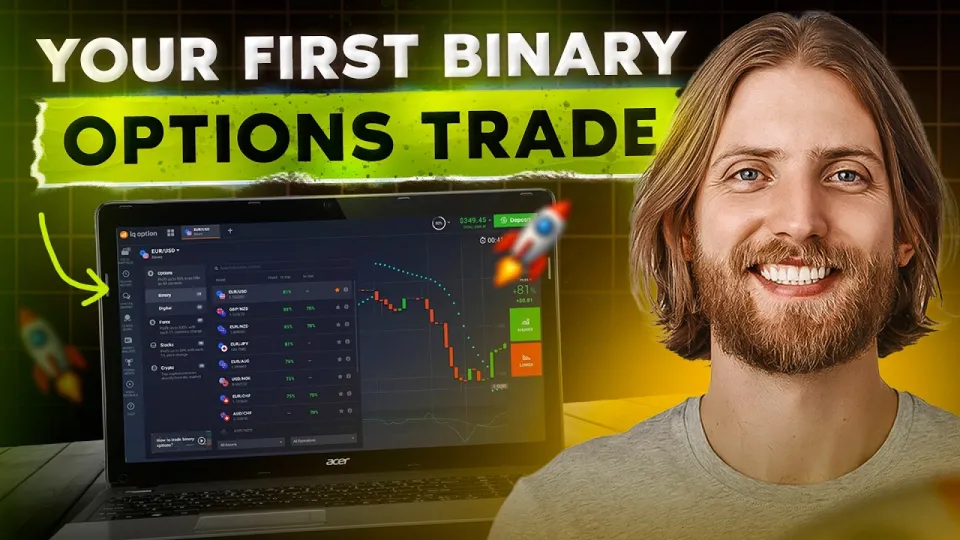
Video: Binary Options | Binary Options Tutorial for Beginners | Where Should You Start?
· based on the channel Binary options tutorial for beginners
Binary options are fixed-stake contracts where you predict whether an asset's price will be higher or lower at a set expiry time, and you either collect a fixed payout or lose your stake. For a beginner, the practical starting point is a demo account on a regulated-style platform such as Quotex, where you can test 50–100 trades on virtual money before depositing anything. This guide covers the mechanics, the math, the platform choice and the habits that separate a plan from gambling.
What binary options actually are and how a trade settles
A binary option has only two outcomes, which is where the name comes from: you are either right or wrong, and the payout is fixed before you click. You choose an asset (EUR/USD, gold, Bitcoin, a stock index), a direction (higher or lower than the current price), a stake and an expiry. When the expiry arrives, the platform compares the entry price with the closing price and credits the payout or deducts the stake.
Key mechanics to know before your first trade:
- Payout percentage. Most brokers advertise 60–95% on a win. At 80%, a $10 win returns $8 profit; a $10 loss costs the full $10. You therefore need a win rate above roughly 55% at an 80% payout just to break even.
- Expiry length. Contracts run from 5 seconds (turbo) to a full trading day. Short expiries behave like coin flips; longer ones give a technical setup time to play out.
- Strike price. The price at the moment you open the trade, not the price you saw a minute earlier.
- No early exit on most contracts. Some platforms allow early closure at a reduced payout, but many do not, so the stake is committed for the whole expiry.
That fixed-risk, fixed-reward structure is what makes binary options simple to learn and hard to master: there is no partial profit-taking and no stop-loss you can move.
Binary options tutorial for beginners: a first-week routine
A first week should be spent entirely in a demo account, with one asset and one expiry length, logging every trade in a spreadsheet. The goal of week one is not profit; it is proving that you can follow a rule set without improvising.
A workable beginner routine:
- Pick one liquid asset, for example EUR/USD during the London session, and one expiry of 5–15 minutes.
- Define an entry rule in advance, such as price reacting at a support level or a moving-average crossover on the 5-minute chart.
- Risk a fixed 1–2% of the demo balance per trade, never more, and keep the stake identical across trades.
- Record entry time, direction, expiry, result and the reason for the trade. After 50 trades, calculate the win rate.
- Only when the demo win rate holds above the breakeven threshold for your payout should you consider a small real deposit.
Choosing a platform: Quotex, Pocket Option and Binarium
The platform matters less than the discipline you bring to it, but the three brokers highlighted in the source video breakdown differ in interface, minimum deposit and asset list. All three offer demo accounts, which is the single most important feature for a beginner.
- Quotex is known for a clean chart interface, a low minimum deposit and a wide set of currency pairs, crypto and commodities. It is the first platform recommended in the tutorial.
- Pocket Option offers social trading features, tournaments and a broad asset list, with a mobile app that many beginners find easier to use than the desktop terminal.
- Binarium positions itself around a simple interface and a range of account tiers, with bonuses tied to deposit size.
Whichever you pick, check three things before depositing: the minimum trade size, the payout on the asset you actually intend to trade, and whether withdrawals are processed in a reasonable time. A high advertised payout on an asset you never trade is irrelevant.
The math that decides whether you survive
Binary options are a negative-sum game after the broker's margin, so position sizing and payout awareness decide your outcome more than any indicator. At a 70% payout you need a 58.8% win rate to break even; at 90% you need 52.6%. Most beginners overestimate their edge, which is why flat staking and a hard daily loss limit are non-negotiable.
Practical risk rules:
- Cap daily losses at 5% of your account and stop trading when you hit it.
- Never increase stake size after a loss to "win it back"; martingale-style doubling blows up accounts in a handful of trades.
- Avoid trading around major news releases such as central bank decisions, when spreads and volatility spike.
- Treat bonuses with care: most carry turnover requirements that lock your funds until a large volume of trades is completed.
Common beginner questions and doubts
Two themes come up constantly among newcomers: whether the links in tutorial videos are safe, and whether a VPN is needed. On the first, always reach the broker through the official website rather than a shortened redirect if you are unsure, and verify the domain. On the second, a VPN such as the one linked in the video description is a privacy tool, not a trading advantage; it does not change payouts or results.
Another frequent doubt is whether a small account can work. It can, but the stake must scale with the balance: a $50 account trading $5 per trade is risking 10% per contract and will be wiped out by a normal losing streak. A $5 stake only makes sense on a balance of roughly $250–500 under a 1–2% rule.
All links from the video breakdown
- Quotex registration: https://dakaklik.com/_quotex?creative_id=WzzpYsjS3ps
- Pocket Option registration: https://dakaklik.com/_PocketOption?creative_id=WzzpYsjS3ps
- Binarium registration: https://dakaklik.com/_Binarium?creative_id=WzzpYsjS3ps
- NordVPN: https://dakatop.link/Nord_us?creative_id=WzzpYsjS3ps
Summary
Binary options reward a fixed, pre-defined risk with a fixed payout, which makes them easy to understand and easy to misuse. Start on a demo account, pick one asset and one expiry, log at least 50 trades and calculate your win rate against the payout before risking real money. The video breakdown on the channel Binary options tutorial for beginners walks through the same starting sequence and links the three platforms used in the tutorial. If you are ready to open an account and test the process with virtual funds first, start here: Quotex sign-up.
Key takeaways
- A binary option is a fixed-stake contract that pays a set percentage if your price direction is right and returns nothing if it is wrong.
- Most platforms offer payouts of roughly 60–95% per winning trade, so a single loss wipes out the profit of one or more wins.
- Typical expiries range from 5 seconds on turbo contracts to hours or a full day on standard ones.
- Quotex, Pocket Option and Binarium are the three platforms promoted in the source video breakdown.
- Demo accounts on these platforms use virtual funds, so a beginner can log 50–100 trades without risking real money.
Source: Binary Options | Binary Options Tutorial for Beginners | Where Should You Start? · Markdown version
Questions & answers
Are the broker links in binary options tutorials safe to use?
Shortened redirect links are common in affiliate tutorials and usually forward to the broker's official registration page. Before depositing, confirm the domain you land on matches the broker's official site, and prefer reaching the platform directly if anything looks off. Never enter payment details on a page you cannot verify.
Do I need a VPN to trade binary options?
No. A VPN hides your IP address and is a privacy tool, but it does not change payouts, expiry times or your results. Some brokers restrict certain countries, and using a VPN to bypass those restrictions can put your account and withdrawals at risk.
How much money do I need to start trading binary options?
Many platforms accept deposits from around $10, but the deposit is not the real constraint; the stake size is. Under a 1–2% risk rule, a $5 stake implies a balance of roughly $250–500. Starting with less means risking a large share of the account on every contract.
What win rate do I need to be profitable?
It depends on the payout. At 80% you need about 55.6% winning trades to break even, at 70% about 58.8%, and at 90% about 52.6%. Anything above the breakeven threshold is profit, which is why tracking your results over at least 50 trades matters more than a few lucky wins.